

Special Session 2: Trustworthy Digital Credentialing in Higher Education: Emerging Architectural Models, Data Privacy, and Global Interoperability
The verification of academic credentials is facing unprecedented global challenges in terms of reliability, security, and interoperability. According to UNESCO, in 2023, the number of students enrolled in higher education worldwide reached 264 million, and more than 6 million students studied abroad within the same year. This immense scale of enrolment and international mobility places significant pressure on credential verification systems. However, most Higher Education Institutions (HEIs) continue to rely on centralized or paper-based processes that are slow, costly, and susceptible to fraud. The rapid rise of remote and cross-border education further increases the demand for timely, secure, and verifiable solutions. For instance, in 2024 alone, OECD countries issued more than 1.8 million new international student permits, while Erasmus+ registered nearly 1.5 million learning mobility participants—volumes that significantly strain existing verification capacities. Distributed Ledger Technologies (DLT) and Self-Sovereign Identity (SSI) offer auditability, security, and user control. However, their adoption is hampered by integration, interoperability, scalability, cost, and data protection challenges. European initiatives—such as EBSI, eIDAS 2.0, and EDC—have advanced standardization, yet significant gaps persist in governance, institutional coordination, pedagogical adoption, and long-term resilience. The reliance on public-key cryptography, particularly quantum-vulnerable algorithms, introduces risks for long-lived academic credentials and underscores the urgent need for crypto-agility and post-quantum migration. While current approaches demonstrate the feasibility of certain components, they provide limited guidance for integrating these systems across different national and institutional settings.
This Special Session seeks to address these challenges by examining and comparing emerging architectural models:
- Enhanced centralized systems, which retain institutional control while improving efficiency, security, and interoperability through modernized infrastructure;
- Hybrid frameworks that combine institutional trust with distributed ledger technologies, balancing verifiability with governance and accountability;
- Self-Sovereign Identity (SSI)-based models, which leverage DIDs and Verifiable Credentials to reduce dependence on central authorities and give users greater control over their credentials.
We consider interoperability, privacy, sovereignty, trust, cryptographic resilience, and adoption as interconnected socio-technical concerns. Instead of advocating for a singular solution, we invite research that elucidates which approaches are most suitable for different institutional, legal, and national contexts, and how to maintain long-term trust in credentials throughout their lifecycle.
This problem is inherently multidisciplinary—spanning far beyond technical dimensions—and requires collaborative approaches across various fields. Therefore, we explicitly invite researchers from a wide spectrum of disciplines, including (but not limited to) information engineering, computer science, law, educational sciences, policy studies, and innovation management, to submit comparative research, case studies, practical frameworks, and analyses addressing the multifaceted socio-technical challenges of achieving secure, interoperable, and privacy-preserving data exchange across diverse global contexts.
Our ultimate goal is to co-design secure, interoperable, privacy-preserving, and resilient credentialing ecosystems that adapt to diverse global contexts and foster policy recommendations, technical roadmaps, and cross-sector partnerships.
Related topics:
* Comparative analysis of verification architectures (Centralized, Hybrid, and Decentralized) and their institutional fit.
* Design and governance of Hybrid Credential Verification frameworks combining centralized trust with blockchain auditability.
* Privacy-preserving mechanisms and regulatory compliance in digital credentialing (GDPR-by-design, DPIAs, lawful-basis assessments, right to erasure).
* Blockchain and DLT applications, feasibility, scalability, and energy efficiency in education.
* Self-Sovereign Identity (SSI), Decentralized Identifiers (DIDs), and W3C Verifiable Credentials in education.
* Crypto-agility, post-quantum resilience, and cryptographic dependency mapping for long-lived credentials.
* Credential lifecycle management: validity, freshness, revocation/suspension/expiry, reissuance, and cached-status refresh.
* Long-term integrity, non-repudiation, audit trails, and cross-border dispute resolution.
* Interoperability profiles, metadata schemas, conformance checklists, and global standards (e.g., CEN/ISO, EBSI, EDC, eIDAS 2.0).
* Identity and Access Governance (IAG), trust models, data sovereignty, and vendor lock-in mitigation.
* AI-assisted fraud detection, credential comparison, and anomaly detection with human-in-the-loop governance and explainability.
* Socio-technical aspects of digital transformation in international academic recognition, including change management and digital literacy.
* Governance-equity-by-design, inclusiveness, and capacity building across diverse national and institutional contexts.
* Evaluation frameworks, plugfests, and validation methodologies for cross-institutional credential verification.
Special Session Chairs:
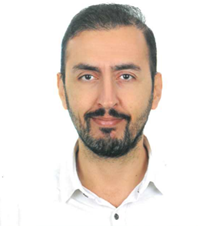
Dr. Osman Selvi, Department of Computer Engineering, Faculty of Engineering, Fenerbahçe University, Turkey
Dr. Osman Selvi is an Assistant Professor in the Department of Computer Engineering at Fenerbahçe University, Istanbul, Türkiye. He holds two bachelor’s degrees — in Computer Systems Education from Gazi University and in Computer Engineering from Kocaeli University — and a Ph.D. in Computer Engineering from Istanbul Aydın University. His primary research focuses on Blockchain Technologies, particularly on positioning blockchain as a complementary and supportive layer to centralized systems. His work explores the use of blockchain for auditing and verification mechanisms, aiming to enhance transparency, reliability, and interoperability in digital ecosystems. He has coordinated the formation of a multidisciplinary consortium and submitted a COST Action proposal titled “Blockchain-Based Academic Credential Verification for Enhanced Trust and Transparency (BACVET)” (Proposal Reference: OC-2026-1-29812), which is currently under evaluation by the European Union. The initiative seeks to address the international challenge of academic credential verification through secure, GDPR-compliant blockchain frameworks. Prior to his current academic role, he served as a Technical Teacher at the Turkish Ministry of National Education (2007–2022) and as a lecturer at Marmara University and Fenerbahçe University. He has been a full-time faculty member at Fenerbahçe University since 2022.

Melike KARATAY, Department of Management Information Systems, Faculty of Economics, Administrative and Social Sciences, Fenerbahçe University, Turkey
Melike KARATAY holds a B.Sc. in Mathematics-Computer Science, and an M.Sc. and Ph.D. in Computer Science, all from Ege University. My academic background focuses on cryptology and post-quantum cryptography. I have been conducting research and developing projects in the fields of network, blockchain and artificial intelligence.
The manuscript should be submitted via the submission link (http://easychair.org/conferences/?conf=iciet2027), or to icietconf@vip.163.com before the submission deadline.